

Questions this work can help structure.
- What exposure and claims definitions are consistent enough for pricing analysis?
- How should experience periods, trend, development, seasonality, and large losses be treated?
- Which segments are credible and operationally usable?
- How do catastrophe loads, expenses, commissions, taxes, reinsurance, or other costs enter the rate?
- What margin or uncertainty considerations are explicit versus implicit?
- What filing, actuarial, legal, or regulatory review is required before implementation?
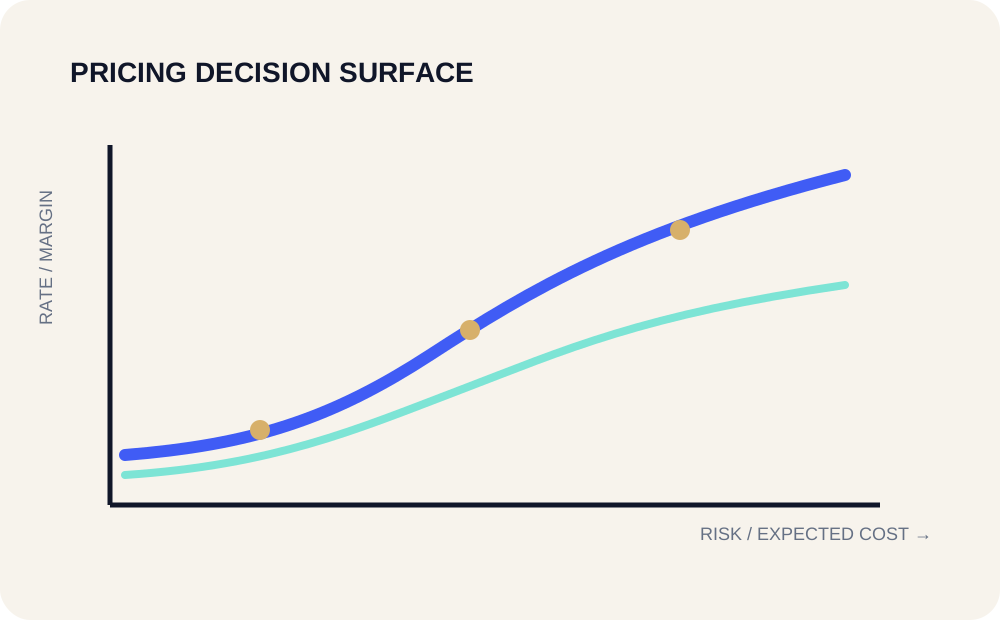
Typical workstreams.
Data diagnostic
Review exposure, claims, segmentation, data definitions, quality, and reconciliation questions.
Expected cost framework
Organize loss cost, frequency/severity, trend, development, catastrophe, or other relevant components.
Rate architecture
Structure segments, relativities, base rates, minimum premiums, limits, deductibles, and other pricing mechanics as applicable.
Governance & selection
Document indication versus selected rate, rationale, sensitivities, limitations, and required approvals.
Potential deliverables.
The exact deliverables depend on the decision, data, jurisdiction, system environment, professional review requirements, and agreed engagement scope.
Pricing data brief
Segmentation map
Expected cost framework
Trend / scenario review
Rate architecture
Sensitivity views
Decision memo structure
Governance checklist
Professional scope: Pricing support is not a guarantee of profitability or regulatory approval. Rate filings and formal actuarial certifications may require credentialed actuarial and legal/regulatory review depending on jurisdiction.
What makes the work defensible.
Outputs should connect back to source data, assumptions, methods, limitations, ownership, and review evidence so management can understand what changed and why.