
Questions this work can help structure.
- How do claims enter the process and which fields or documents are required?
- Which rules can route or validate a claim automatically?
- Where is adjuster, examiner, supervisor, medical, legal, fraud, or specialist judgment required?
- What creates rework, duplicate entry, queue delays, or ambiguous ownership today?
- Which decisions require evidence, explanation, approval, or escalation?
- What data should management see about cycle time, backlog, exceptions, leakage, or quality?
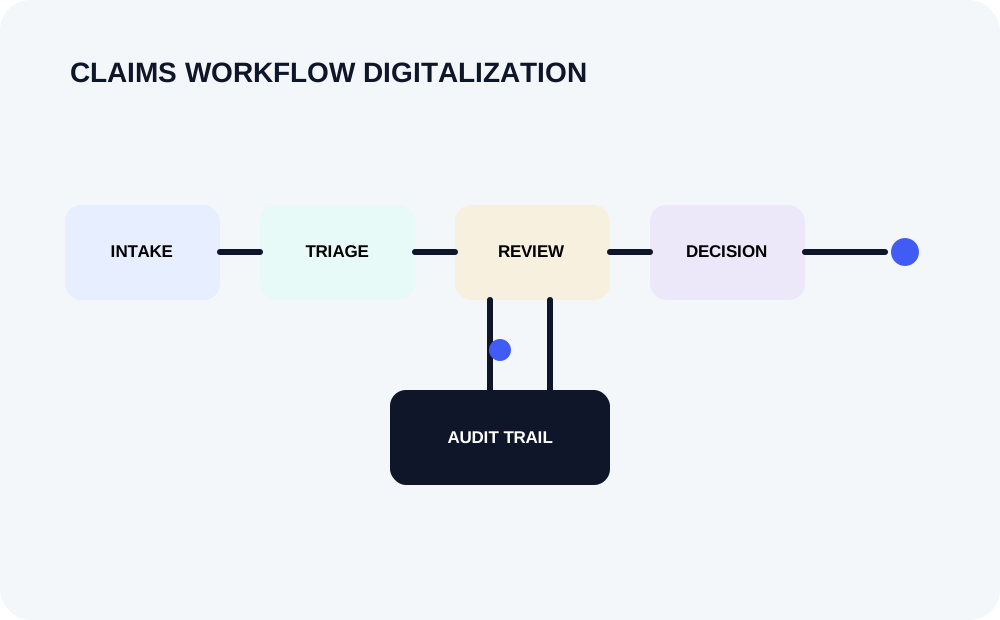
Typical workstreams.
Current-state mapping
Document claim states, teams, systems, handoffs, documents, decisions, delays, and exceptions.
Future-state design
Define intake, triage, routing, automation candidates, human-review points, and escalation paths.
Control & audit trail
Specify evidence, timestamps, ownership, reason codes, approvals, exception logs, and change control.
Implementation requirements
Translate the future-state workflow into functional requirements and management reporting needs.
Potential deliverables.
The exact deliverables depend on the decision, data, jurisdiction, system environment, professional review requirements, and agreed engagement scope.
Current-state map
Future-state workflow
Decision-rule inventory
Exception paths
Control/evidence matrix
Functional requirements
Management reporting brief
Implementation roadmap
Professional scope: Claims workflow consulting focuses on process and control design. Software configuration, systems integration, cybersecurity, privacy compliance, or legal claims handling requirements may require additional specialists and separate scope.
What makes the work defensible.
Outputs should connect back to source data, assumptions, methods, limitations, ownership, and review evidence so management can understand what changed and why.