

Questions this work can help structure.
- What decision is the model intended to support?
- Which assumptions are observed, selected, estimated, or stressed?
- How do premiums, benefits, claims, expenses, lapses, and financial terms interact?
- Which outputs matter to product, finance, risk, pricing, or management users?
- What sensitivities and movement tests reveal model behavior?
- Which formal actuarial or regulatory reviews are required for the intended use?
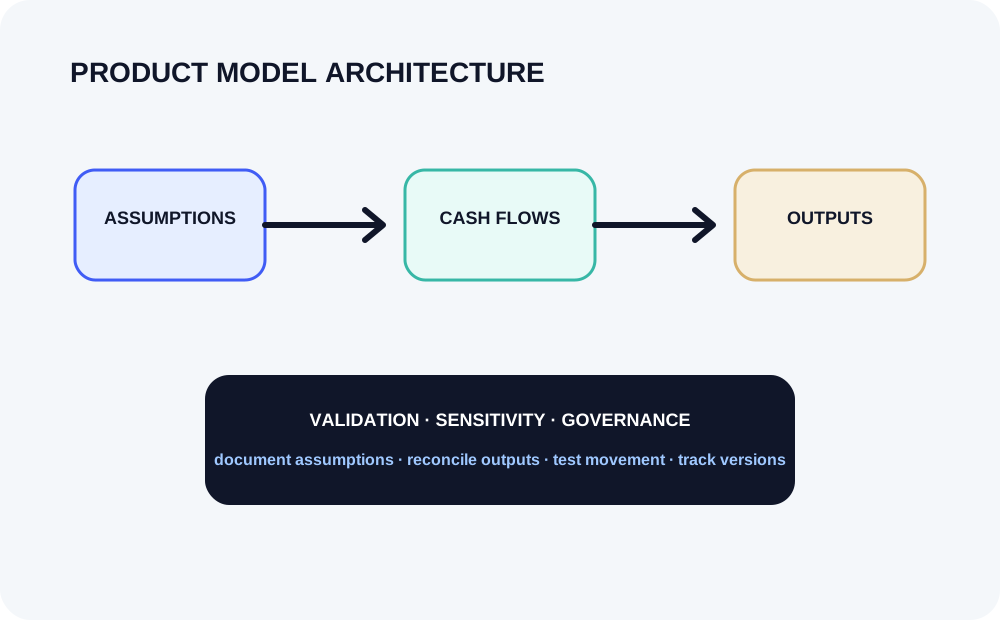
Typical workstreams.
Model architecture
Separate inputs, assumptions, mechanics, outputs, scenarios, and governance into a reviewable structure.
Assumption inventory
Document definitions, sources, ownership, effective dates, rationale, review frequency, and limitations.
Validation framework
Use reconciliation, reasonableness checks, sensitivity tests, benchmark comparisons, and documented exceptions.
Documentation & handoff
Create model maps, operating notes, version controls, limitations, and review requirements.
Potential deliverables.
The exact deliverables depend on the decision, data, jurisdiction, system environment, professional review requirements, and agreed engagement scope.
Model architecture
Assumption inventory
Cash-flow map
Scenario set
Sensitivity analysis
Validation checklist
Model documentation
Governance notes
Professional scope: This service description does not imply statutory signing authority. Formal actuarial opinions, filings, reserves, or regulated certifications may require an appropriately credentialed actuary and separate engagement terms.
What makes the work defensible.
Outputs should connect back to source data, assumptions, methods, limitations, ownership, and review evidence so management can understand what changed and why.