
Questions this work can help structure.
- Which peril, region, event set, return-period concept, or stress scenario is relevant?
- What exposure data is available and how complete is location-level information?
- How are property characteristics, occupancy, construction, limits, deductibles, or other terms represented?
- What vulnerability or damage assumptions are being used?
- How are policy and reinsurance financial terms applied?
- How should model uncertainty, data limitations, and alternative scenarios be communicated?
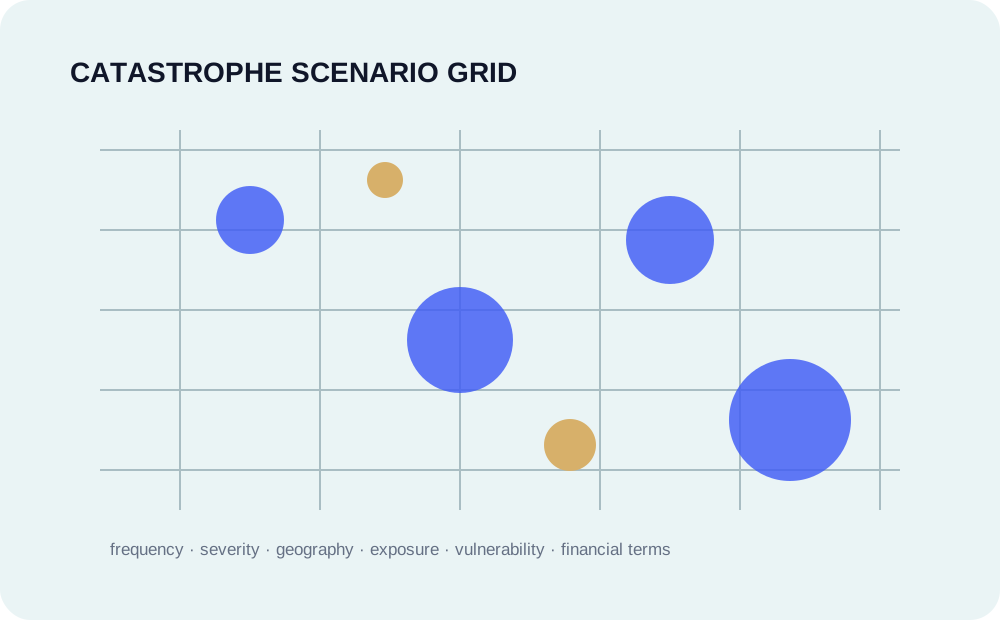
Typical workstreams.
Exposure review
Organize location, value, policy, limit, deductible, construction, occupancy, and concentration information.
Scenario architecture
Define event, hazard, vulnerability, financial terms, and alternative assumption cases.
Loss views
Develop event, aggregate, layer, or portfolio views appropriate to the decision and available model structure.
Uncertainty communication
Present ranges, sensitivities, limitations, and model assumptions separately from deterministic forecasts.
Potential deliverables.
The exact deliverables depend on the decision, data, jurisdiction, system environment, professional review requirements, and agreed engagement scope.
Exposure data map
Scenario brief
Concentration view
Event loss views
Financial-term map
Sensitivity cases
Uncertainty notes
Management risk summary
Professional scope: Catastrophe model results are estimates based on data, assumptions, event representations, vulnerability, and financial terms. They are not forecasts or guarantees of actual future loss.
What makes the work defensible.
Outputs should connect back to source data, assumptions, methods, limitations, ownership, and review evidence so management can understand what changed and why.